


 AUS
AUS
 IND
IND
What Does Bookkeeping Actually Do for a Small Business?
Ask a room full of small business owners what bookkeeping does, and you’ll hear answers like “records transactions,” “keeps the books clean,” or “something I deal with at tax time.”
All technically true, but also incomplete.
In reality, bookkeeping for small business plays a much bigger role than most owners realise.Small businesses are not a niche segment of the economy. According to the International Federation of Accountants (IFAC), small and medium-sized enterprises account for over 90% of businesses worldwide and contribute 60–70% of employment and economic output in many countries. With such a large share of the global economy relying on small businesses, strong financial foundations like accurate bookkeeping become essential, not optional.
It quietly influences cash flow, decision-making, compliance, stress levels, and even whether a business survives its early years. When done well, it gives you clarity and control. When ignored or done poorly, it creates blind spots that can cost far more than just time.
So let’s break it down properly, without jargon, without overcomplication, and with a clear focus on what bookkeeping actually does for a small business in day-to-day reality.
What Is Bookkeeping (Without the Textbook Definition)?
At its core, bookkeeping is the process of recording, organising, and maintaining financial transactions. Every sale, expense, payment, invoice, and receipt flows through this system.
But answering “what does bookkeeping do” only at that level misses the point.
Bookkeeping isn’t just about entering numbers into software. It’s about creating a financial story that actually makes sense, one that shows how money moves through your business, where it’s getting stuck, and whether your operations are financially sustainable.
For small businesses, bookkeeping forms the foundation for everything else:
- Tax reporting
- Cash flow planning
- Pricing decisions
- Growth strategy
- Financial accountability
Without it, you’re essentially running a business with the dashboard lights turned off.
Bookkeeping vs Accounting: Why the Difference Matters
One common source of confusion for business owners is the difference between bookkeeping and accounting.
Think of bookkeeping as the day-to-day groundwork. It captures and organises financial data in real time. Accounting, on the other hand, uses that data to analyse, interpret, and report on the bigger picture.
When bookkeeping is inaccurate or inconsistent, accounting becomes guesswork. That’s why strong small business bookkeeping isn’t optional, it’s what allows accountants and advisors to give meaningful insights rather than assumptions.
How Bookkeeping Keeps Cash Flow Visible (and Under Control)
Cash flow issues are one of the most common reasons small businesses struggle or shut down, even profitable ones. This challenge is widely reflected in global research.
According to a QuickBooks financial literacy report, 43% of small business owners say cash flow is a problem for their business, and 74% report that these challenges have remained the same or worsened over time.
The report also highlights that many owners struggle to interpret financial data, making consistent bookkeeping a critical tool for visibility and control.
Good bookkeeping:
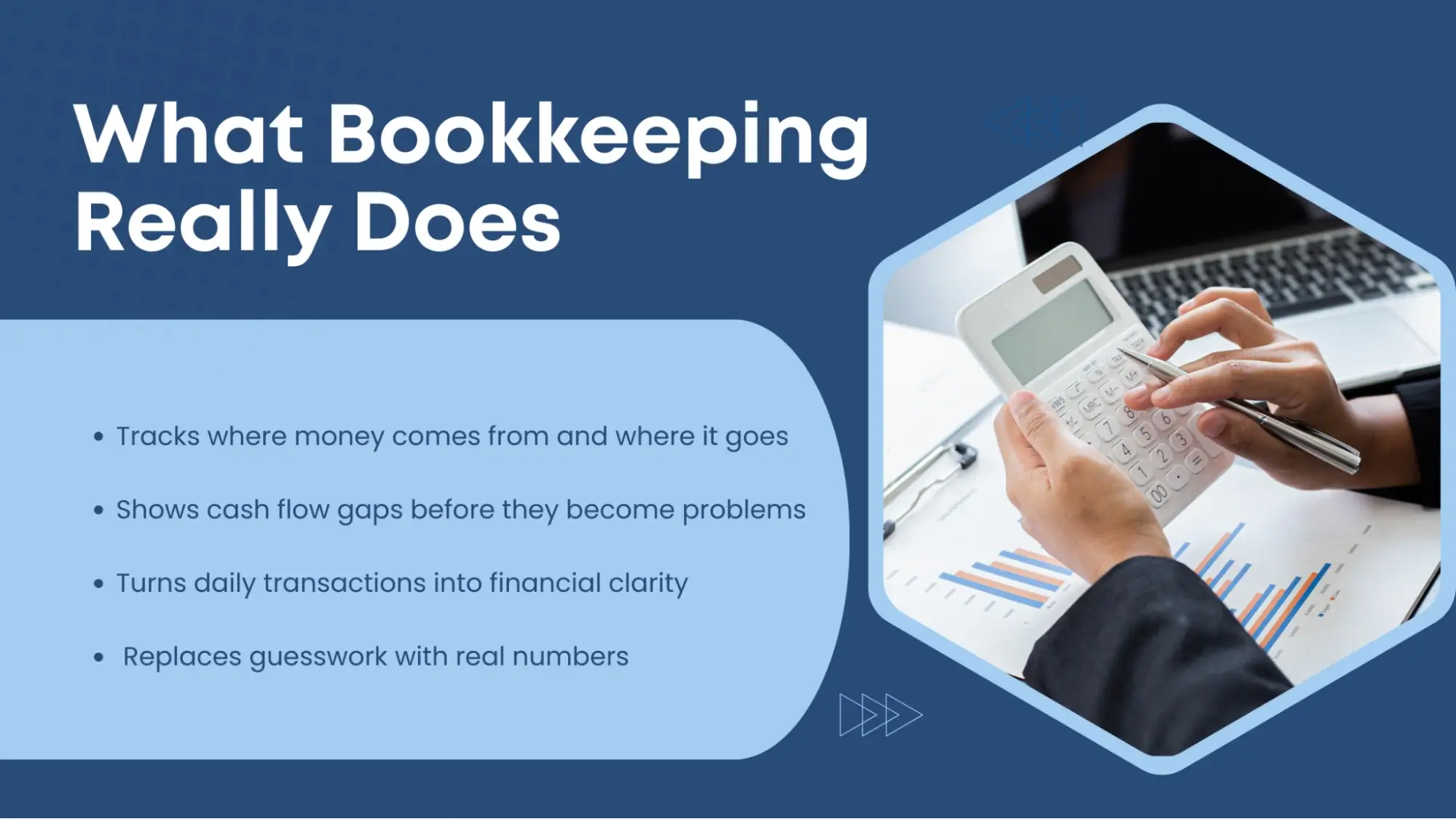
- Tracks money coming in and going out
- Shows timing gaps between income and expenses
- Highlights recurring costs that quietly drain cash
Without up-to-date records, many owners rely on bank balances to judge financial health. The problem? Bank balances don’t account for upcoming bills, unpaid invoices, or tax obligations.
This is where bookkeeping basics for small business make a real difference. By recording transactions consistently, you get a clear picture of what’s actually available to spend, and what isn’t.
Turning Financial Data into Better Decisions
When bookkeeping is done properly, it becomes a decision-making tool, not just an admin task.
Accurate records help answer questions like:
- Which products or services are truly profitable?
- Are prices covering costs and overheads?
- Which clients bring value, and which quietly cost money?
- Can the business afford to hire, invest, or expand?
Many small businesses make decisions based on instinct or surface-level numbers. Bookkeeping replaces guesswork with evidence. It gives you confidence that choices are grounded in reality, not assumptions.
This gap between confidence and clarity is common. A global survey by Xero found that around half of small business owners face financial challenges due to gaps in financial literacy, even when they believe they understand their finances, highlighting why bookkeeping must turn data into information owners can actually use.
Saving Time (and Mental Energy) You Don’t Have
DIY bookkeeping often starts with good intentions. But as transactions grow, systems get messy, and compliance requirements increase, it becomes a silent time drain.
Business owners spend hours:
- Sorting receipts
- Fixing categorisation errors
- Chasing missing records
- Trying to reconcile numbers before deadlines
One of the less talked-about benefits of small business bookkeeping services is mental clarity. When records are handled consistently, owners can focus on running the business rather than constantly “catching up” financially.
Staying Compliant Without Last-Minute Panic
Compliance is one area where poor bookkeeping becomes expensive very quickly.
Bookkeeping ensures:
- Accurate tax calculations
- Correct GST/VAT reporting
- Timely filings
- Clear audit trails if questions arise
Missing records, incorrect categorisation, or delayed entries often lead to penalties, interest, or rushed clean-ups that cost far more than ongoing bookkeeping ever would.
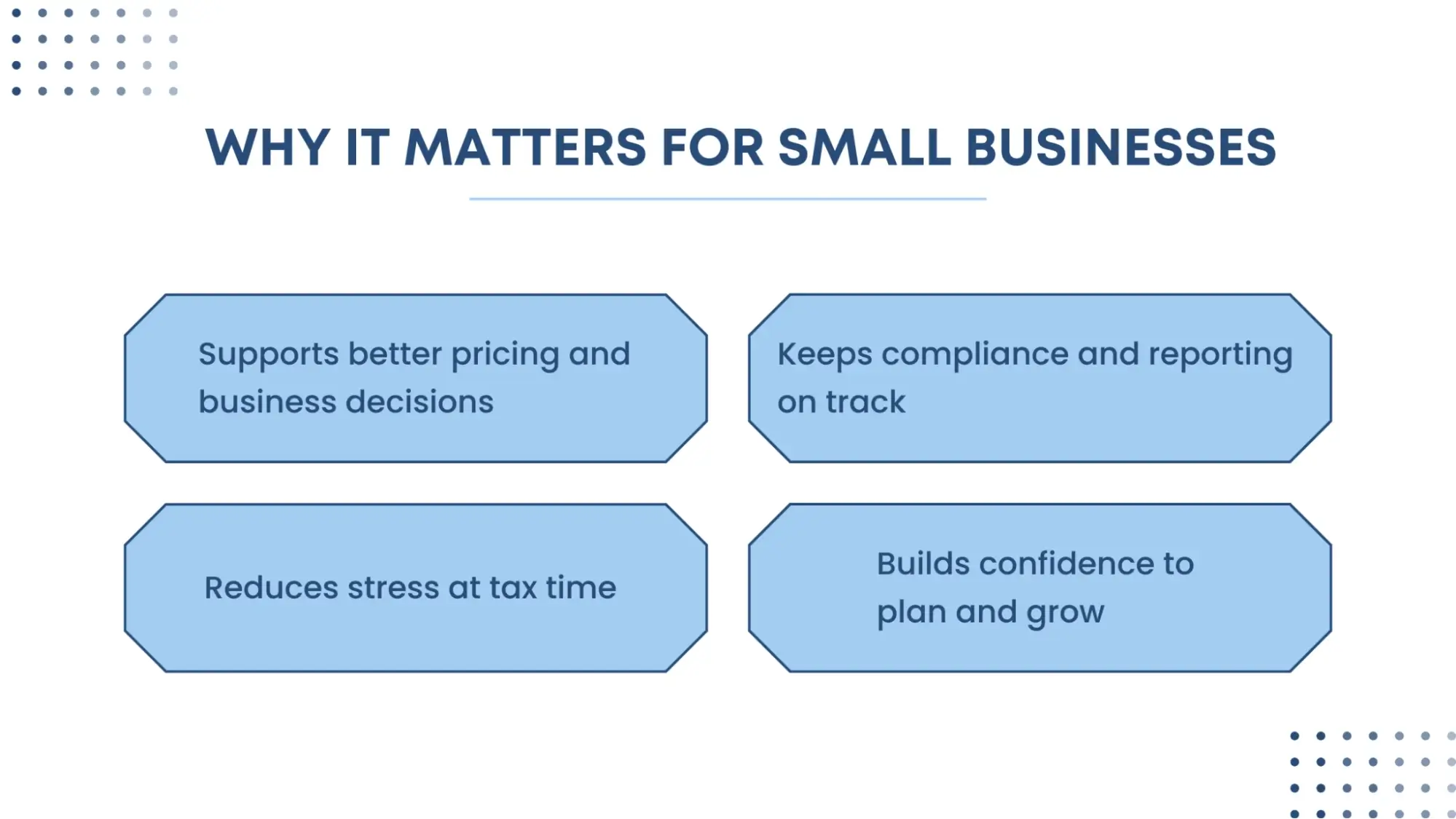
Understanding the bookkeeping responsibilities for small business includes recognising that compliance isn’t just about meeting deadlines, it’s about having reliable records to support every number reported.
Making Tax Time Easier, and More Cost-Effective
For many business owners, tax season is stressful not because of taxes themselves, but because the books aren’t ready.
Clean bookkeeping means:
- Less back-and-forth with accountants
- Fewer billable hours spent fixing errors
- Reduced risk of missed deductions
- Greater confidence in what’s being reported
When bookkeeping is done throughout the year, tax becomes a process, not a crisis.
Supporting Growth, Funding, and Long-Term Stability
Growth requires visibility. Whether you’re applying for finance, planning expansion, or simply trying to stabilise operations, lenders and stakeholders look for clear financial records.
Strong small business bookkeeping supports:
- Loan applications and investor discussions
- Budgeting and forecasting
- Monitoring performance trends over time
Historical data isn’t just about the past, it helps you make informed decisions about the future.
The Real Cost of Poor or Inconsistent Bookkeeping
Poor bookkeeping doesn’t usually cause immediate failure. Instead, it creates slow, compounding problems:
- Cash shortages without clear reasons
- Overpaying tax or missing deductions
- Inability to spot declining margins early
- Increased stress and reactive decision-making
Ironically, many businesses delay bookkeeping to “save money,” only to spend far more later fixing avoidable issues.
When Should a Small Business Take Bookkeeping Seriously?
The short answer: earlier than most people do.
Some signs it’s time to focus on bookkeeping:
- You don’t know your monthly profit without guessing
- Tax time feels overwhelming every year
- Cash flow surprises are common
- Financial decisions feel reactive, not planned
Understanding the bookkeeping basics for small business early builds habits that scale as the business grows, rather than breaking under pressure later.
So, What Does Bookkeeping Actually Do for a Small Business?
- It provides clarity.
- It replaces assumptions with facts.
- It supports compliance, planning, and sustainable growth.
Most importantly, bookkeeping helps small business owners feel in control of their finances instead of constantly catching up.
At its best, bookkeeping isn’t about numbers, it’s about visibility, confidence, and informed decision-making. And for any business that wants to last, that foundation matters far more than most people realise.